A hit! A very palpable hit!
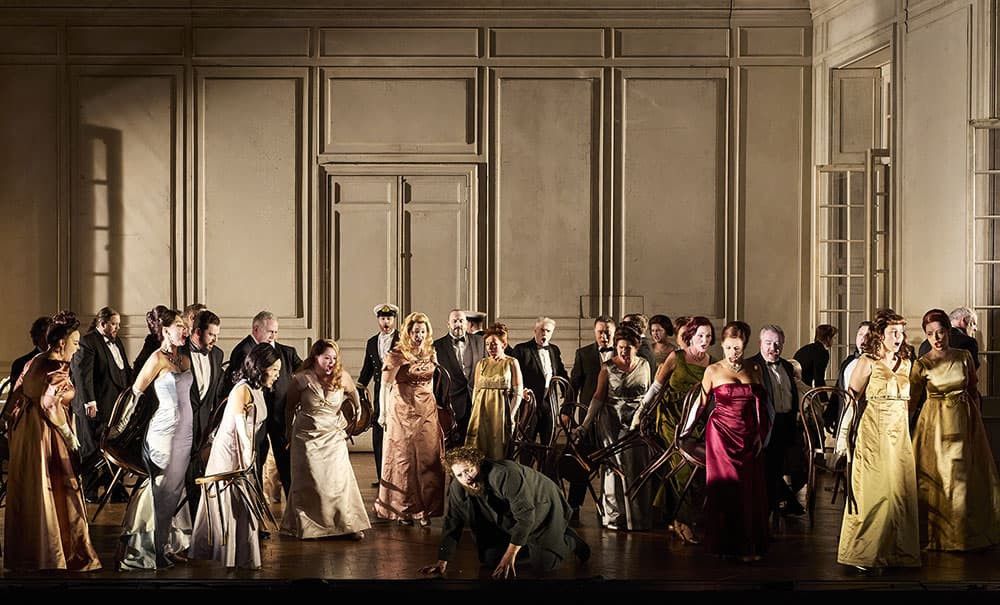
Brett Dean's opera Hamlet is one of the most exciting productions from Opera Australia since Wozzeck several years ago. Working with librettist Matthew Jocelyn, Dean's opera rearranges and fragments Shakespeare's play so as to take the audience into the maddened mind of the protagonist, and see everything through his eyes. Neil Armfield, who is as pre-eminent among Australian directors as Dean is among composers, has created a stage theatre piece in which every element is so closely articulated with every other that it is hard to imagine a more perfect production of this work; indeed, hard to imagine any other. The technical wizardry of his and Dean's collaboration is phenomenal.
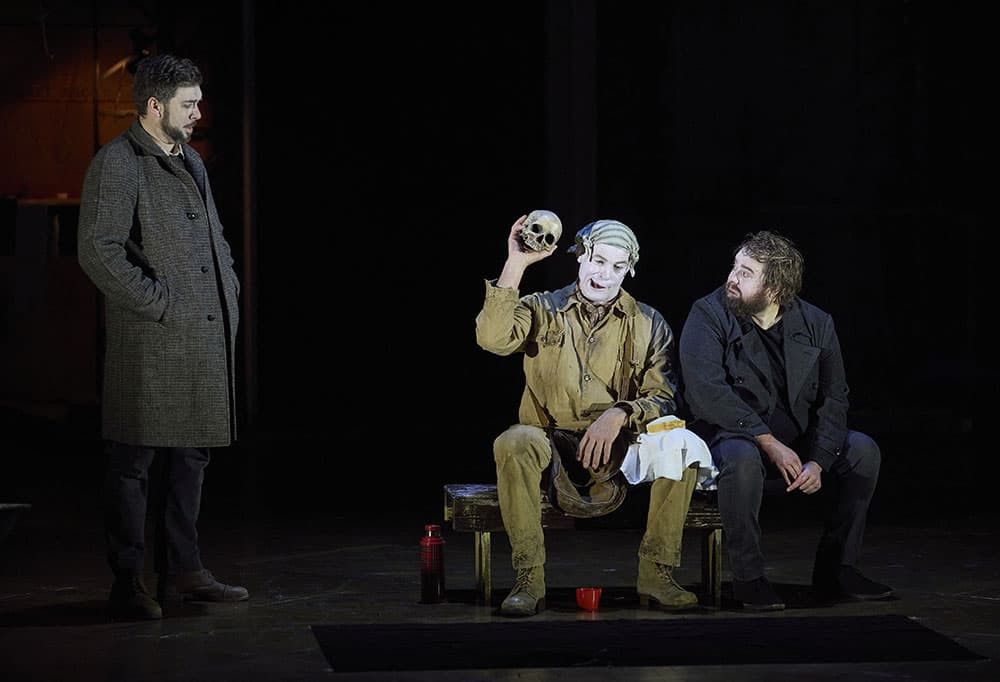
The cast is woven superbly into the theatrical and musical fabric of the show, and the two main principals, Alan Clayton as the prince and Lorina Gore as Ophelia, are almost unbelievably good. Clayton has sung the role in all four previous stagings of the work. I saw him when the production was staged at the Adelaide Festival in 2018, and he has quite simply made the role his own. On stage almost all the time, and singing Brett Dean's fiendishly unpredictable intervals as if they were second nature, his performance is a tour de force of remarkable proportions.
The role of Ophelia has been given more emphasis in the opera than in the original play, and gives Lorina Gore the opportunity to display her extraordinary vocal and thespian gifts. Unlike Hamlet, she is on stage only for a few scenes but whenever she is, the audience is riveted to her. From the "green girl" perplexed by the stop-start attentions of mad Hamlet's passion for her, to her own mad scene, far more compelling than the famous one in Ambroise Thomas' opera, she negotiates Dean's coloratura writing with flexibilty and trueness to detail, and convinces us that Dean's music, for the most part uncompromisingly jagged, can be beautiful. Her "never never never", sung at a pianissimo that was nonetheless clearly audible through various webs of orchestral and vocal sounds, haunts us through the dense pages of the score until the very end.
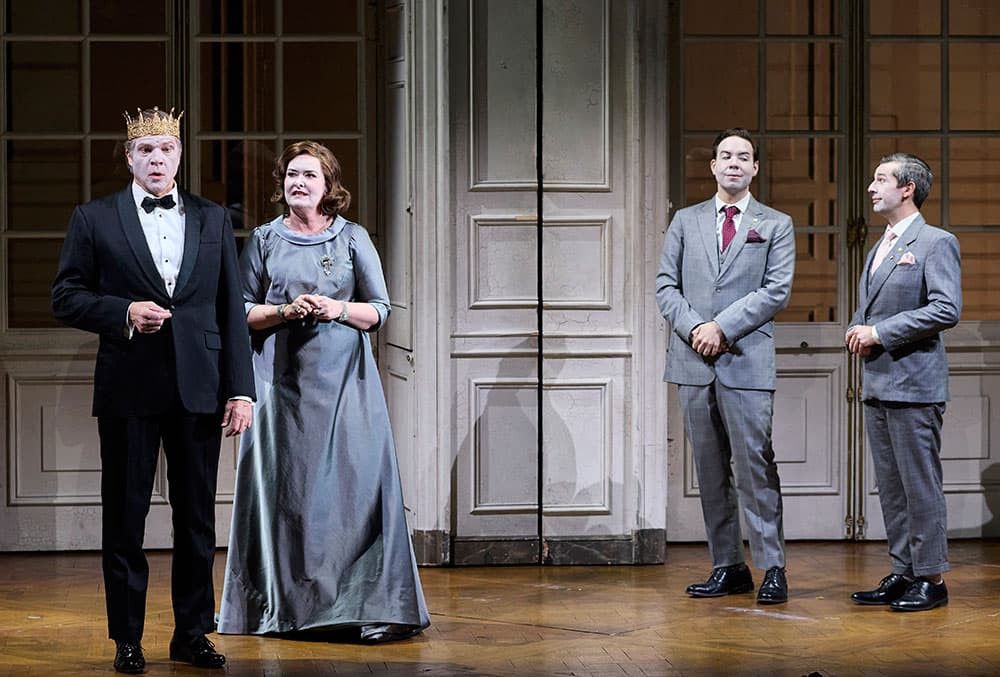
The character Polonius is a good deal less likeable in this opera than in Shakespeare's play, and Kanen Breen portrays him with dashing self-important arrogance. Catherine Carby sang the role of Gertrude, Hamlet's mother, and conveyed very well the ambivalence of this character in the face of Hamlet's distress and Claudius' evil propensity for poisoning. I remember Cheryl Barker, who sang the role in Adelaide, saying it was the hardest role she had ever had to learn.
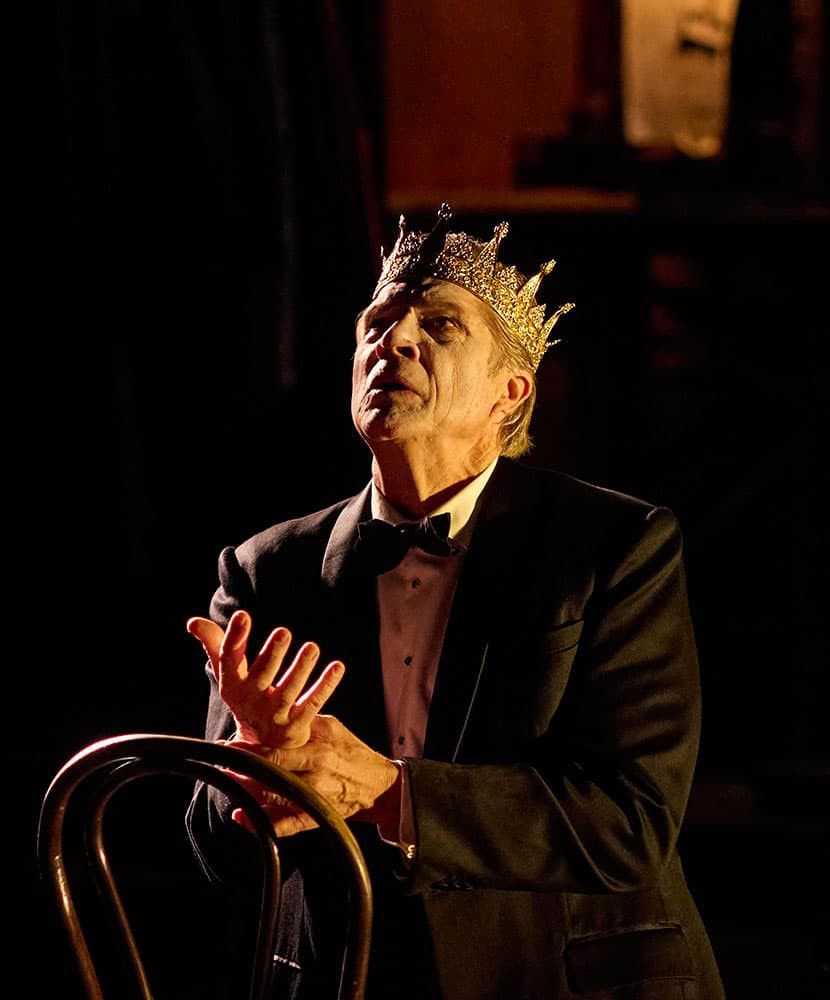
Jud Arthur sang the ghost of Hamlet's father, in which his gorgeous deep bass voice was complemented by a stage presence so wooden as to seem to represent the rigor mortis of the dead king. So far so good; but when he also sang the Gravedigger, his voice and movements were so similar that I thought Armfield must be making a conflation of the two characters into an image of death.
Of course, death there is a-plenty in this opera. And this raises a point that must be on everyone's mind – how did the creative team tackle the adaptation of what is possibly the most famous play ever written into an opera? How to avoid cliché? Fragments of text serve as recurrent motifs - "...or not to be...", "The rest is..." Text, particularly the lines that have become quotations, is taken from one character and given to another. Scenes are omitted or rearranged, as in Verdi's Otello. And much of this was because of the decision to take us inside the mind of Hamlet as he disintegrates into madness.
Brett Dean's music is indeed the music of madness. What is it like? Elektra without a string section? Wozzeck without canons (apart from Rosencrantz and Guildenstern)? He uses the whole orchestra as one vast percussion section, in which one could be forgiven for thinking there were no strings except double basses for large stretches. The recurrent motifs, themselves fragmentary, are further disrupted and disappear into the depths of the deep percussion or the astral flutes. Only the clarinet section plays music recognisably idiomatic for their instruments. He claims in the program for the show that the music is rarely atonal. Well, there are many definitions of tonality, but by my admittedly conservative understanding of the term, it is rarely tonal. A few recognisable chords do not, in my view, tonality make.
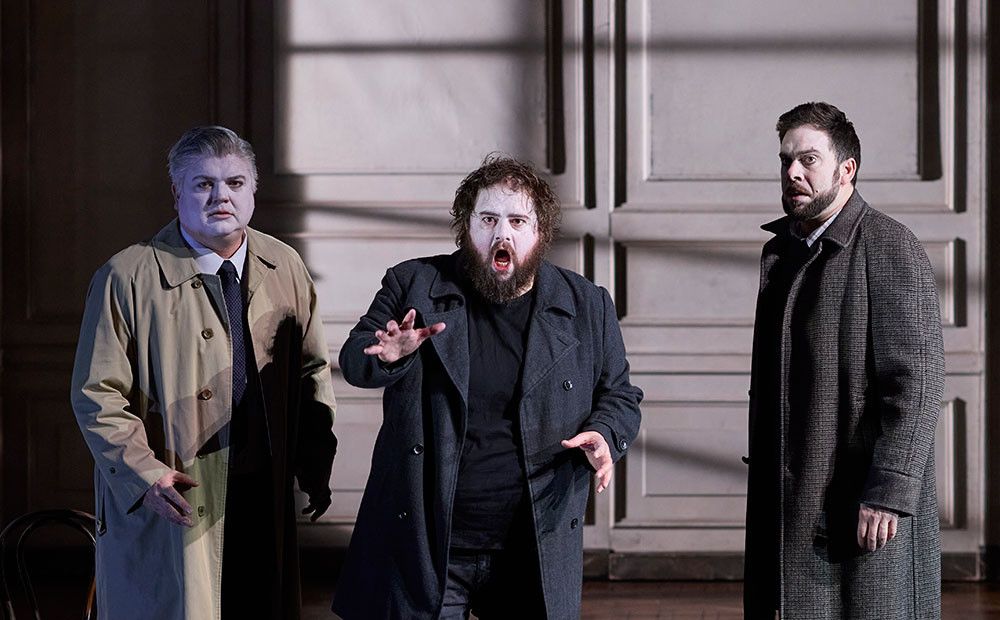
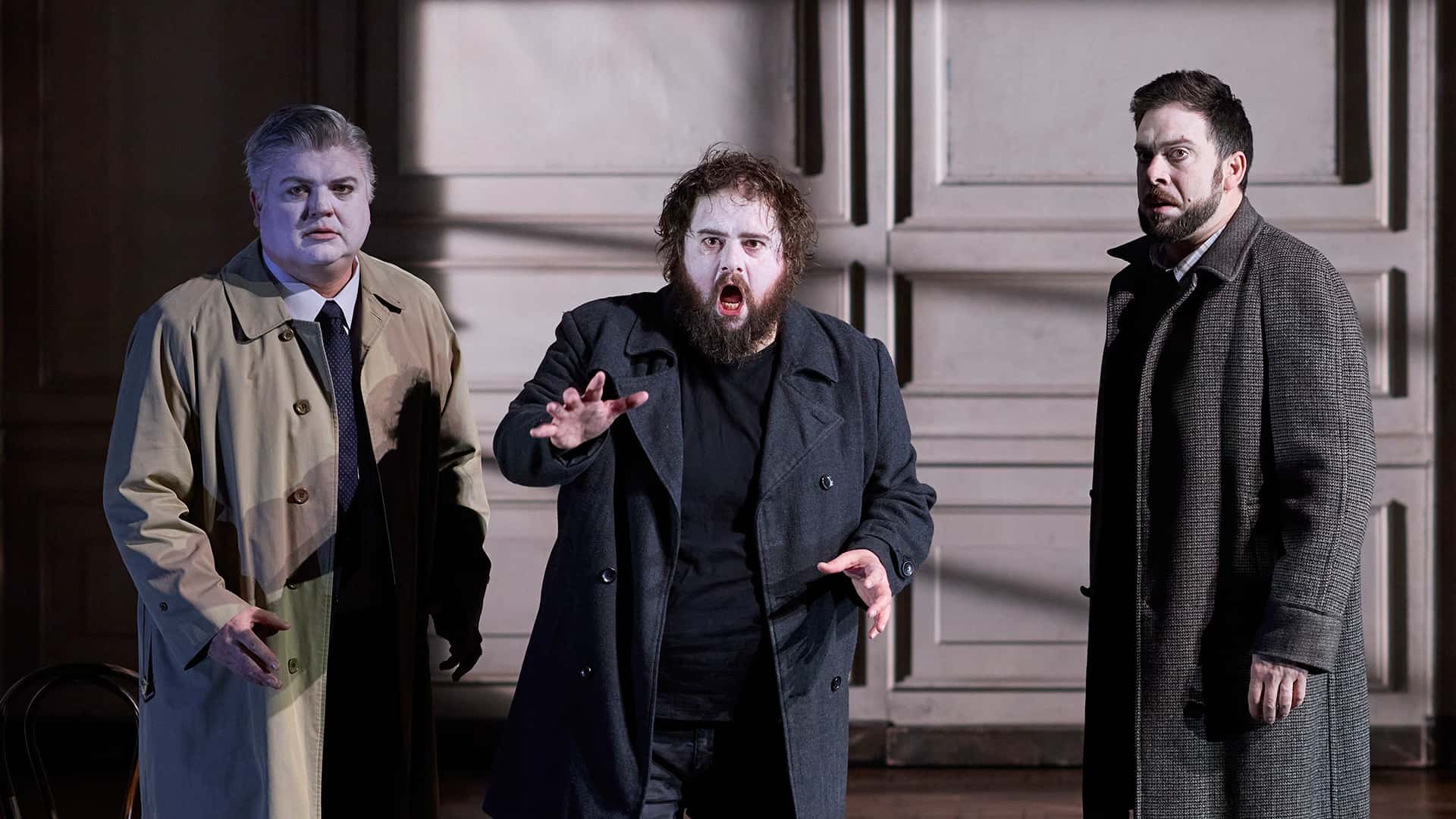
And then there are Rosenstern and Guildencrantz. Why is it that in Shakespeare's tragedies, the comic interludes work so well, but in operatic tragedies comic characters fall so flat? Ping, Pang and Pong (embarassingly Orientalist) – do we laugh at them? Does the unfolding tragedy of Turandot really receive a more telling emphasis by contrast? Likewise Rosencrantz and Guildenstern (embarassingly anti-semitic), do 2 identical countertenors make us laugh? Do we even want to laugh? Is this because music's magic is deeply subjective, as Nietzsche put it, in the realm of the Dionysiac, whereas humour insists on a degree of Apollonian detachment?
Tim Anderson conducts the orchestra with easy clarity through a score which is anything but easy or clear, though extremely well written. The orchestra and the chorus (the Opera Australia chorus has long been one of its gems) spill out into the auditorium, playing and singing from the side boxes with eerie effect.
That way madness lies. But for those of us who can see the madness in ourselves or around us, this production is truly cathartic. Bravo, Opera Australia!
Event details
Opera Australia presents
Hamlet
by Brett Dean
Director Neil Armfield
Venue: Joan Sutherland Theatre | Sydney Opera House NSW
Dates: 20 July – 9 August 2024
Tickets: from $79
Bookings: opera.org.au
Gallery